Tuesday, February 28, 2012

Good Finanical Websites

Friday, February 17, 2012

FAS 157


Definition of a fair value – change in focus from an “entry” price to an “exit” price i.e. how much would be received to sell the asset or paid to transfer the liability instead of how much would be paid to acquire an asset or received to assume a liability?

Fair value measurement – the Standard prescribes the use of one or more of three acceptable valuation techniques (noted below).
1. Market approach – prices and other relevant information generated by market transactions involving identical or comparable assets or liabilities i.e. observable prices.
2. Income approach – valuation techniques used to convert future amounts (e.g. cash flows or earnings) to a single present amount (discounted), based on values indicated by current market expectations.
3. Cost approach – current replacement cost, adjusted for obsolescence.


Fair value hierarchy: Assets and Liabilities carried at fair value have to be classified and disclosed in one of three Levels (1, 2 or 3), with additional disclosure required for Level 3 (the most complex) items.

The fair value hierarchy prioritises the inputs used to measure fair value into three broad Levels (Levels 1, 2 and 3), moving from quoted prices in active markets in Level 1 to unobservable inputs in Level 3.

Level 1 inputs – observable, quoted prices for identical assets or liabilities in active markets.
Examples include US government and agency securities, foreign government debt, listed equities and money market securities. (Mark to Market)

Level 2 inputs – quoted prices for similar assets or liabilities in active markets; quoted prices for identical or similar assets in markets that are not active; and inputs other than quoted prices e.g. interest rates and yield curves. (Mark to Model)
Examples include corporate bonds (investment grade, high yield), mortgage-backed securities, bank loans, loan commitments, less liquid listed equities, municipal bonds and certain OTC derivatives.

Level 3 inputs – unobservable inputs for the asset or liability. These should be based on the best information available. The company should utilise all reasonably available information, but need not incur excessive cost or effort to do so. However, it should not ignore information that can be obtained without undue cost and effort. As such, the reporting entity’s own data should be adjusted if information is reasonably available without undue cost and effort.
Examples include distressed debt, private equity, exotic or non-standard derivatives.

Disclosures – move from generic fair value disclosures with little transparency of approach to an established hierarchy with required disclosures.

Friday, November 11, 2011

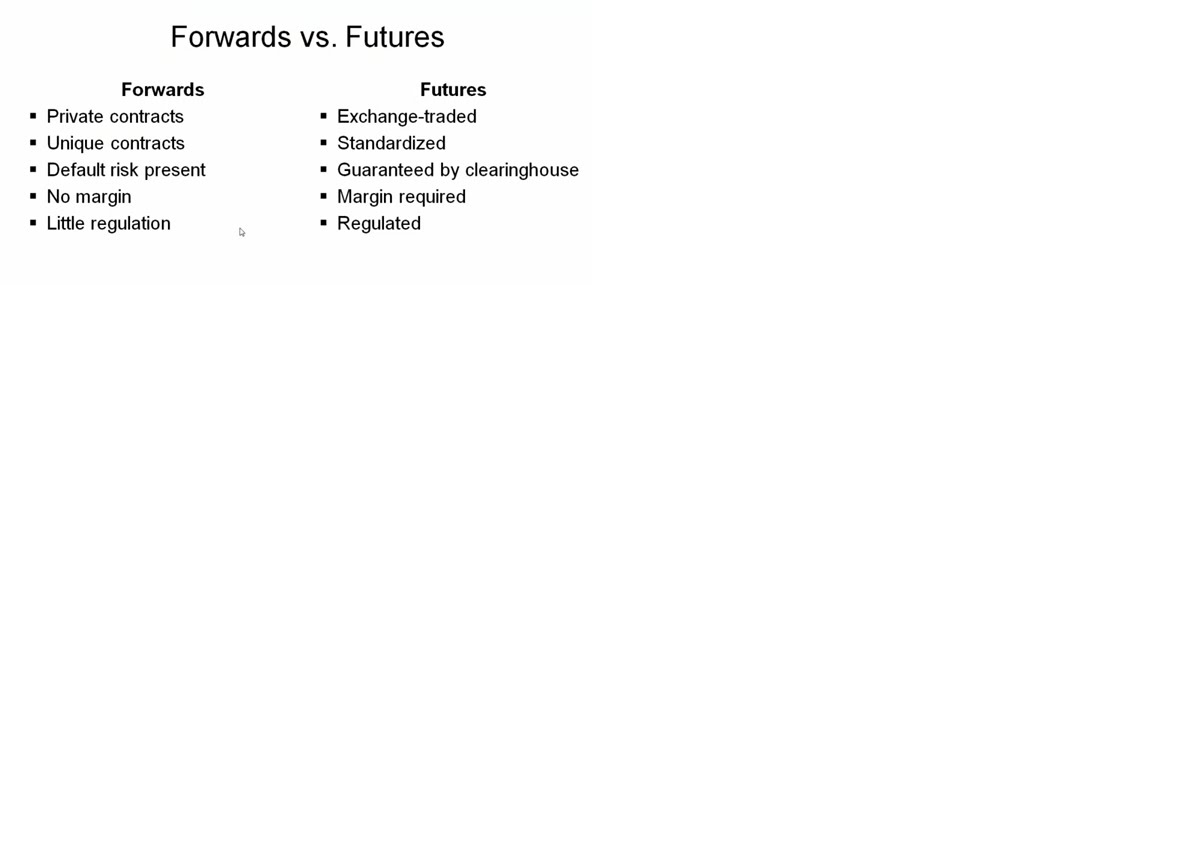
Forwards vs Futures

Notes on Yield Spreads

1. Understand what is on X axis and Y axis for Yield Curve.
2. Shapes of Yield Curves
3. Theories which Determines Shape of the Yield Curve.
a. Pure Expectations Theory
b. Liquidity Premium Theory
c. Market Segmentation Theory
4. Treasury Spot Rates -- simplest way to think is Zero Coupon Bond.
5. Stripping -- Dealers effectively create Treasury Securities the securities
which are not created by Treasury Dept.
6. Yield Spreads
a. Absolute spread = Higher yield - Lower Yield
b. Relative Spread = Absolute Spread / Subject Bond
c. Yield Ratio = Subject Bond / Benchmark Bond

Credit goes to ArifIrfanUllah.com

Tuesday, September 20, 2011

About me and Blog

About me and Blog :

I came from Software Background and completely new to Finance so I thought to share my understanding and my Journey in finance in simple terms. In my view in this Global Economy every person should know basic finance and economics to make better decisions for everyday living.

Good Videos
http://www.arifirfanullah.com/cfa-video-lectures